


Ever wondered why teaching dogs to heel is tough for many? Almost 70% of dog owners face this challenge. The right leash can change everything. It gives control and keeps your dog comfy. From pros to everyday folks, the hunt for the perfect leash is on. Let’s look at which ones are best for teaching the heel command.
Key Takeaways
- Durability is crucial, with some leashes lasting more than 25 years.
- A 6-foot lead is ideal for walks and training.
- The Mendota lead stands out for its usefulness and durability.
- Longer leads, 20-30 feet, are great for specific training.
- About half of accidents happen during the first strong leash correction.
- Leashes with brass parts are best for resisting rust and lasting long.
- For proper heel training, keep the leash loose. This stops the dog from leading.
Introduction to Training Leashes
Training leashes are key for teaching your dog to behave on walks. Knowing the types and their uses helps with dog training. If you’re teaching “Heel” or general obedience, the correct leash is crucial.
Picking the right leash is a big part of training your dog. Training leashes help you communicate with your dog. They help your dog learn to walk peacefully by your side. This is the start of learning commands like “Heel.”
Here are some tips on using training leashes:
- “Heel” is tough for puppies to learn. Warm up your puppy for a couple of minutes before training.
- Spending 15 minutes a day on training is best. It teaches them without stress.
- Start with slow steps with your puppy. Then, introduce the “Heel” command as you go.
- Walking on the same side (left or right) keeps things clear and helps with “Heel.”
- Holding a treat close to your puppy can get their attention back. Or it rewards them during training.
- Training around mealtimes and starting when it’s quiet can help. Then, slowly add more distractions.
Here is a table to understand different training leashes and their uses:
| Type of Leash | Ideal Use | Length |
|---|---|---|
| Flat Leash | Basic training and daily walks | 3-4 feet |
| Slip Lead | Quick adjustments and control | 5-6 feet |
| Martingale Collar | Training and gentle corrections | Varies |
| EZ Trainer | Comprehensive training tool | Variable |
| Snap Lead | Versatility and safety | 4-5 feet |
| Traffic Lead | Control in crowded places | 2-3 feet |
| Check Cord | Field work and distance control | 15-30 feet |
Choosing the right leash means considering your goals, where you’ll train, and your dog’s needs. Understanding leash types betters your training. It makes training more effective and fun for you and your dog.
Slip Leads: Easy Control and Quick Adjustments

Slip leads are a handy tool for dog lovers. They let you easily handle your dogs, especially during heel training. They’re great for rescuing strays, making quick changes during training, or getting a dog in and out of a car. Slip leads are known for their convenience.
What is a Slip Lead?
A slip lead combines a collar and leash in one. This makes it easy to quickly put it on a dog. The design helps prevent the dog from escaping. Slip leads come in materials like leather, rope, and nylon. This means there’s a type for every preference and need.
Benefits of Using Slip Leads for Heel Training
Heeling is a key training command, and slip leads work well for it. They keep pressure on the dog’s neck which helps prevent them from running off. This control makes it easier to keep your dog close. The quick adjustments training leads offer can help your dog feel more confident.
- Quick and easy to put over the dog’s head
- Effective in emergency situations
- Calming effect on dogs, aiding concentration during training
- Suitable for training puppies in basic commands like stay, heel, and down
- Stylish and functional for show dogs
Correct Usage of Slip Leads
To get the most out of a slip lead, use it right. Place the loop high on the dog’s neck, behind the ears. This spot gives better control. Make sure it’s loose enough to fit a few fingers between the lead and the neck. Use the stopper to keep the lead from getting too tight.
Consistent and patient practice with slip lead training is recommended for effective results.
Choosing the Right Size Slip Lead
Slip leads fit dogs of all sizes. Choose the right length and thickness based on the dog’s size and how intense the training will be. The Mighty Paw Slip Lead, made from 1/2″ climbers’ rope, is durable for tougher training. Making sure the slip lead fits well is key to keeping your dog comfortable and safe.
| Material | Durability | Purpose |
|---|---|---|
| Leather | High | Show dogs, basic training |
| Rope | Very high | Intensive training, working dogs |
| Nylon | Moderate | Everyday use, puppies |
Martingale Collars for Heel Training
Martingale collars are a favorite for dog owners who want to improve their dogs’ walking habits. They help teach dogs to walk closely by their side. Let’s look into what makes these collars special and useful.
Understanding Martingale Collars
Martingale collars are sometimes called “no-slip” collars. They gently tighten if a dog tries to pull away. This design makes them great for training. They work well for dogs with wide necks, like Greyhounds and Whippets.
Advantages of Martingale Collars
These collars have many benefits, including:
- Escape prevention: They keep dogs from getting loose, which helps with heel training.
- Adjustable tension: They tighten and loosen just right, guiding without pain.
- Versatility: They’re good for all dogs, from puppies to adults and even rescues.
Proper Fitting and Adjustment
Getting the fit right with martingale collars is key. The collar should be snug but not too tight. It should not choke the dog but prevent escaping. This ensures the collar works well while being comfy.
Being consistent with training is crucial. Change up your walking pace and direction to back up what you’re teaching. Training in various places also solidifies heel training. Martingale collars thus become an effective tool for training.
EZ Trainers: Comprehensive Training Tools

Training a dog to follow the heel command is tough. Yet, EZ Trainers make it easier and more effective. We spent a year trying different tools like the easy-harness and prong collar. Through this, we found EZ Trainers to be superior.
Features of EZ Trainers
EZ Trainers shine with their flexible design for obedience and field training. They put pressure on the dog’s abdomen, not the neck. This makes them kinder to use. They also help with commands like heel, sit, and down, offering full control.
The design helps in positive ways. It brings the dog’s attention back to the trainer smoothly. This improves the whole training process.
How EZ Trainers Facilitate Heel Command
For the heel command, EZ Trainers are top-notch. They create a visual cue that helps guide the dog to heel properly. Trainers with strong upper body strength find them especially helpful. Also, they make learning to heel feel good for the dog, which helps a lot.
Our work with Bandit, a retriever, showed how great EZ Trainers are. Bandit was tough and liked to lead. But he improved a lot with these trainers. His success rate for the ‘come’ command hit about 90%. He only jumped the fence once. Since these activities were off-leash, they worked well for his active breed. It proved EZ Trainers are effective, even in tough training tasks.
Snap Leads: Versatility and Safety
Snap leads are very popular for their great versatility and safety. They are the most common leash type available. They give dog owners and trainers the flexibility needed for safe and effective dog handling. Snap leads work well with all types of collars and harnesses. They ensure a secure attachment and reduce the risk of the leash coming off accidentally.
Characteristics of Snap Leads
Snap leads are known for their compatibility with many collars. They have a secure and easy snap attachment. This feature ensures the leash stays on, giving peace of mind during walks or training. Snap leads come in various widths like ⅜” and 1”, and lengths such as 4-foot, 6-foot, and 15-foot. This variety caters to different dog sizes and training needs.
Optimal Sizes and Uses of Snap Leads
Snap leads are highly versatile in size and use. They can adapt to crowded cities or open parks. A shorter 4-foot lead offers better control in busy areas. For recall training in bigger spaces, a 15-foot lead is ideal. Snap leads are key in different scenarios, ensuring dogs are trained effectively and safely.
Why Snap Leads are Ideal for Heeling
Snap leads are great for the heel command because of their stability and easy use. They allow for clear command transmission from the handler to the dog. This leads to better communication. With a secure leash attachment, control is maintained, even when unexpected situations arise. This makes snap leads essential for successful heel training, for beginners and pros alike.
Traffic Leads for Tight Control

Traffic leads are a must-have for managing your dog in busy places. They help keep your pet safe and under control when you’re walking in crowded areas. Let’s look into what traffic leads are and their best uses.
What are Traffic Leads?
Traffic leads are short leashes for better control in tight spots. Their small size is great for handling dogs in busy city streets or during car rides. They keep your pet close and ensure you can control them easily when needed.
When to Use Traffic Leads
Traffic leads are perfect for keeping your dog under control. They’re really helpful in these situations:
- High-traffic areas: When walking through crowded places and you need to keep your dog close.
- Training sessions: They’re good for teaching your dog to heel by giving quick corrections.
- Vehicular travel: They ensure your dog stays by your side during car trips.
- Exercise in tight spaces: If you’re in a small park or narrow path, they prevent accidents.
Choosing the right traffic lead is important based on your dog’s size and needs. For example, the Heather’s Heroes Side Kick Leash is best for small dogs, rating it a 10/10. The Viper Biothane Working Lead, on the other hand, is tough and great for big dogs, earning a 9/10.
Here’s a quick chart comparing different traffic leads:
| Leash Model | Rating | Ideal For |
|---|---|---|
| Heather’s Heroes Side Kick Leash | 10/10 | Small dogs, sensitive tracheas |
| EC.TEAK Retractable Dog Leash | 1/10 | Not recommended for training |
| Viper Biothane Working Lead | 9/10 | Large dogs, durability |
Picking the right traffic lead helps keep your dog safe. It makes walks in tight spots better for you and your pet. By knowing more about traffic leads, we make better choices for our dog’s needs.
Check Cords for Field Training
Check cords are a must-have for field training leashes. They let you stretch your dog’s training distance. These cords are key for teaching your dog how to come back, obey, and move to training without a leash. They help trainers teach a dog to follow commands, even from far away.
Uses of Check Cords
Check cords shine in field training. They help trainers keep control of their dogs from afar. These cords are great for teaching your dog to come back fast when called. They also help in training dogs to stay close during off-leash activities.
Best Practices for Check Cord Training
Start with a cord of the right length for the exercise. Slowly extend the distance as your dog listens better. Being consistent and patient is key. Rushing can slow down learning. Beginning with cords that are 20 or 30 feet long is ideal for learning commands like “Here”. Adding commands like “Sit” and “Stay” helps teach good manners.
Popular Lengths and Types of Check Cords
Check cords vary in length and material to fit different training needs. Our options range from 15 to 50 feet. Some are made to last in various settings. Here’s a breakdown of the different lengths and types:
| Length | Type | Suitable Training |
|---|---|---|
| 15 feet | Nylon | Initial recall training and heel training |
| 20 feet | Cotton | Intermediate control and obedience |
| 30 feet | Biothane | Advanced off-leash transitions |
| 50 feet | Rope | Field training for hunting dogs |
Choosing the right length and material helps trainers teach better. Check cords, and other field training leashes, help make a well-behaved pet.
Factors to Consider When Choosing a Training Leash
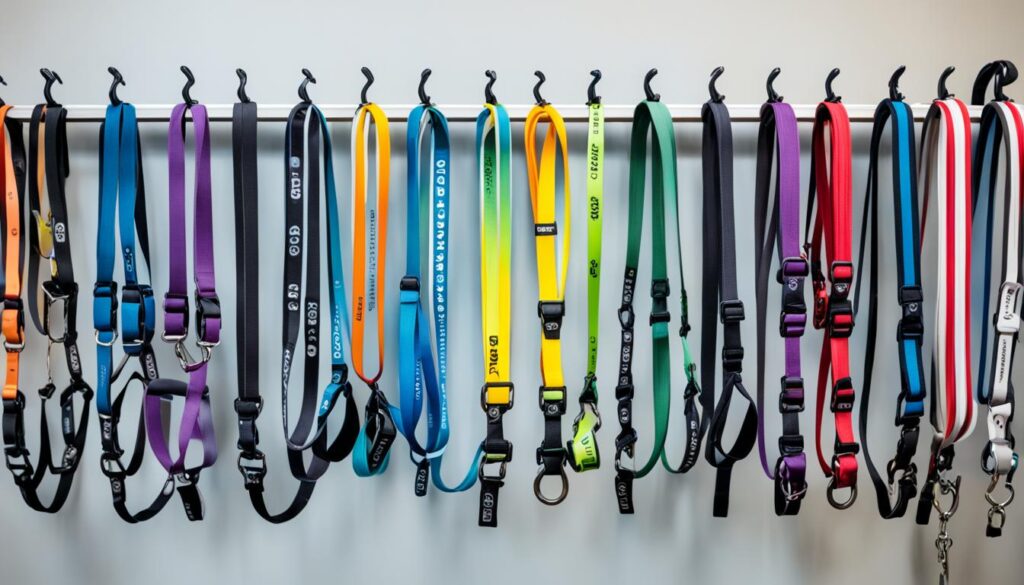
When picking out training leashes, it’s important to look at a few things. You must think about the leash’s material, its length, and what your dog needs based on its breed and size. These factors play a big role in how well the leash will work for training.
Leash Material
The leash’s material matters a lot in our leash selection criteria. You can find leashes made of leather, rope, or biothane. Leather is strong and feels nice to hold. Rope leashes are stretchy and tough, great for big, powerful dogs. Biothane is good for dogs that like to play in water because it’s waterproof and simple to clean.
Leash Length
How long the leash is should match what you’re trying to do in training and where you are. A 6-foot leash is common because it gives a good mix of control and freedom. Retractable leashes can go from 4 to 30 feet, so they’re handy for many activities. Adjustable leashes change length, from 3 to 6 feet, which is useful in different settings.
Dog Size and Breed Considerations
Choosing the right training tools for your dog’s breed is crucial. Big dogs need strong leashes to handle their power. Dogs that chew a lot do well with chain leashes, as these are tough to break. Smaller dogs are better off with leashes that are light and flexible. These types are easier to manage and don’t weigh the dog down.
| Leash Type | Material | Length Range | Best For |
|---|---|---|---|
| Standard Leash | Leather, Nylon | 4-8 feet | General Training |
| Retractable Leash | Nylon | 4-30 feet | Variable Freedom |
| Adjustable Leash | Biothane, Rope | 3-6 feet | Versatile Training |
| Chain Leash | Metal Links | Varies by Weight | Chewing Prevention |
| Martingale Leash | Nylon, Satin | 4-6 feet | Pull Control |
| Multiple Dog Leash | Leather, Nylon | Variable | Walking Multiple Dogs |
| Seat Belt Safety Leash | Nylon | Variable | Car Safety |
| Dog Harness Leash | Nylon, Polyester | 4-6 feet | Control & Comfort |
Maintenance and Durability of Training Leashes
Good leash care keeps training tools useful for a long time. Checking durable dog leashes often finds weak spots early. This way, we fix small problems before they get worse.
- Leather leashes can last for years if treated with leather conditioner to prevent drying and cracking.
- Nylon leashes are best cleaned with mild soap and warm water, checking frequently for any frays as these can lead to further damage.
- Chain leashes require periodic inspection for rust and the integrity of the links.
Picking durable dog leashes with solid construction is smart. For example, leashes with brass hardware don’t rust easily. This makes them more durable. Safety and reliability should always be our focus.
Keeping leashes clean and in good shape makes training better. It also keeps our pets safe. With regular care and the right upkeep, our training equipment will always be ready for action. This helps in having effective and fun training sessions.
Conclusion
Choosing the right training leash is key to training your dog to heel. It’s important to know about different types, like slip leads and martingale collars. This knowledge lets us pick the best leash for our dog’s needs and our training goals.
Different leashes work better for different dogs. For big, strong dogs, a prong collar might work best. But it has to fit right and be used the right way. Using the same commands and actions every time helps your dog learn without getting mixed up. Adding distractions slowly can also make your dog’s training stronger.
The care of your training leash is also very important. Regular checks and upkeep keep the leash working well. This makes sure your training sessions stay high quality. In the end, the perfect training leash builds a strong bond between you and your dog. It leads to a well-trained, listening pet.
FAQ
What is a Slip Lead?
A slip lead is both a leash and collar in one. It slips over the dog’s head with ease. This tool is great for training, offering quick adjustments. It helps control the dog during activities.
What are the benefits of using slip leads for heel training?
Slip leads stop the dog from escaping the lead. They make fast adjustments easy. This helps keep the dog calm and close while walking.
How should slip leads be used correctly?
To use slip leads right, adjust for a comfortable fit around the neck. You should fit a few fingers between the lead and the neck. This ensures the dog is safe and comfy while letting the owner train effectively.
How do you choose the right size slip lead?
Picking the right slip lead depends on the dog’s size and training level. Choose a length and diameter that fit your training needs. Matching the lead to your dog’s size ensures better control.
What are Martingale Collars?
Martingale collars, or “no-slip” collars, tighten when the dog pulls. This gentle constriction helps train dogs. They’re good for dogs that could slip out of regular collars.
What are the advantages of Martingale collars?
Martingale collars prevent escapes and offer extra control. They adjust for safe tension. Ideal for teaching heel and improving walks.
How should Martingale collars be fitted and adjusted?
Fit Martingale collars so they tighten comfortably without hurting. They should be snug, allowing normal breathing and movement.
What are the features of EZ Trainers?
EZ Trainers focus on humane control by spreading pressure across the abdomen. They help with obedience and heel training. This design supports better attention and training results.
How do EZ Trainers facilitate the heel command?
EZ Trainers gently steer the dog’s focus towards the trainer. They help with attentive walking and managing behaviors like sitting. They also prevent jumping.
Q: What are the characteristics of Snap Leads?
Snap leads feature strong attachments that minimize accidental releases. They work with many types of collars and harnesses. They are chosen often for training or daily walks.
What are the optimal sizes and uses of Snap Leads?
Snap leads vary in length for different sizes and training goals. Short leads work well for heel training. Longer leads let dogs explore more. Their design offers great control.
What are Traffic Leads?
Traffic leads are short, for keeping dogs under tight control. They’re perfect for crowded places. Their design is for close guidance.
When should Traffic Leads be used?
Use traffic leads for precise control, like in busy areas or while traveling. Their short length ensures firm management.
What are the uses of Check Cords?
Check cords are long leads for training over distances. They help with recall and obedience. They’re great for teaching heel from afar.
What are the best practices for check cord training?
For check cord training, pick the right length for each task. Increase distance as your dog gets better. Stay consistent for the best results.
What are the popular lengths and types of check cords?
Check cords come in various lengths suitable for different training. Field trainers choose them based on durability. They’re important for effective training from a distance.
What factors should be considered when choosing a training leash?
Consider the leash’s material, like leather or biothane, and its length. Think about your dog’s size and what you’re training for. Choosing well helps training go smoothly.
How do leash length and material affect training?
Leash length influences how much control or freedom your dog has. Short ones are good for heel training; longer for recall. Materials affect how long a leash lasts and how easy it is to use.
Why is maintenance and durability important for training leashes?
Keeping leashes in good condition ensures they’re safe and reliable. Regular checks for damage, proper cleaning, and choosing durable materials help. This makes every training session effective.


