Understanding the Basics of Dog Body Language
[stoc]
Introduction to Dog Body Language
Understanding dog body language is more than a skill for a dog owner – it’s an essential part of our bond with furry friends. This unique form of communication is a language in its own right, one that relies not on words but on a rich tapestry of movements, positions, and expressions.
- This language is universal among dogs, transcending the boundaries of breed, age, and size. It’s their way of expressing their feelings, intentions, and needs.
- Dogs communicate primarily through body language. While they make sounds like barking, whining, and growling, these vocalizations form just a small part of their communication. The majority is conveyed through their bodies – a wagging tail, a tilted head, pricked ears, or bared teeth each carries a message in the dog’s language.
- By learning to interpret these signals, we can better understand our dogs. We can discern their emotions, whether they’re happy, sad, scared, excited, relaxed, or anxious. We can respond to their needs in a way that reassures them and strengthens our bond.
- But understanding dog body language goes beyond responding to our dogs’ needs. It’s a pathway to a stronger, more meaningful relationship with them. It’s about building a connection based on mutual understanding and respect.
So, let’s embark on this journey of understanding together. Let’s learn our dogs’ language, understand their unspoken words, and deepen our bond with our loyal companions.
General Body Posture
The general body posture of a dog can tell us a lot about its emotional state. Here’s a brief rundown:
- Relaxed body posture: When a dog is relaxed, their body is loose, and their movements are fluid. They might be standing or lying down, but they appear comfortable and at ease either way.
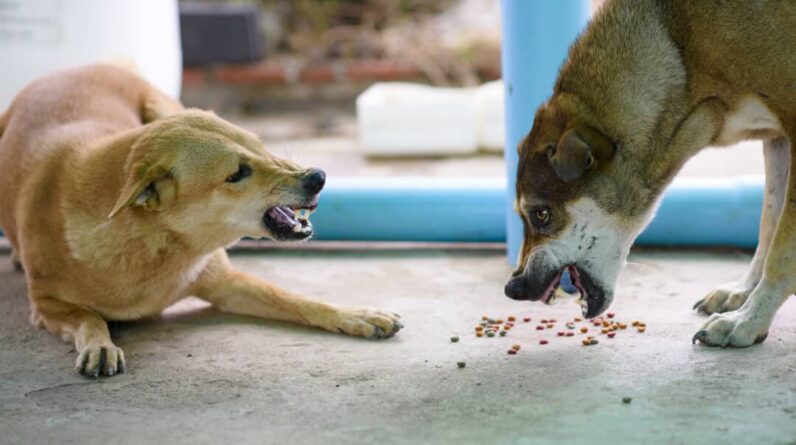
- Aggressive body posture: An aggressive dog might stiffen their body, lean forward slightly, and stare intently. They’re trying to make themselves look bigger and more intimidating.
- Fearful body posture: A fearful dog will do the opposite. They’ll try to make themselves look smaller by hunching over, tucking their tail, and possibly even shaking.
- Excited body posture: An excited dog is a bundle of energy. They might jump around, wag their tail rapidly, and their body will be tense with anticipation.
| Body Posture | Description |
|---|---|
| Relaxed | Body is loose, comfortable |
| Aggressive | Body is stiff, leaning forward |
| Fearful | Body is hunched, tail tucked |
| Excited | Body is tense, full of energy |
Ear Position
The position of a dog’s ears can also give us clues about what they’re feeling:
- Ears forward: When a dog’s ears are pricked forward, they’re alert and interested in something.
- Ears back: If a dog’s ears are pulled back, it could mean they’re scared or anxious. But it could also mean they’re being submissive or friendly, so it’s important to look at the rest of their body language for context.
- Ears relaxed: When a dog’s ears are naturally positioned, it usually means the dog is relaxed and comfortable.
Tail Position and Movement
A dog’s tail is like a flag that signals its emotional state:
- Tail held up high: This could mean the dog is alert, excited, or demonstrating dominance.
- Tail in a neutral position: A tail that’s held in its natural position indicates a relaxed and comfortable dog.
- Tail between legs: If a dog tucks their tail between their legs, they’re likely scared or anxious.
- Wagging tail: A wagging tail is usually a sign of happiness, but the speed and direction of the wag can also provide additional information.
Facial Expressions
Finally, a dog’s facial expressions can tell us a lot about their mood:
- Relaxed face: A relaxed dog will have soft eyes, a closed or slightly open mouth, and relaxed ears.
- Aggressive face: An aggressive dog might bare their teeth, wrinkle their muzzle, and have hard, staring eyes.
- Fearful face: A fearful dog might also bare their teeth in a submissive grin, have wide, scared eyes, and their ears might be flattened against their head.
- Excited face: An excited dog will have bright, alert eyes, their mouth might be open in a happy pant, and their ears will be perked up.
Understanding dog body language is like learning to speak dog. It’s a vital skill for any dog owner, and it’s the first step towards building a stronger# Part 1: Understanding the Basics of Dog Body Language.
Understanding Canine Communication
Understanding dog body language goes beyond just observing their physical movements. Dogs also use sounds and signals to communicate. A growl, a bark, a whimper – each sound carries a different message. But, their body language plays a starring role in canine communication. From their ears’ position to their tail’s movement, every little gesture is a word in the dog language.
Reading a Dog’s Body Language
Understanding dog body language is akin to decoding a complex puzzle. Each body part contributes to the overall picture of their emotional state.
- Interpreting head and neck position: The position of a dog’s head and neck can provide valuable insights into its current mood. A raised head with a stiff neck might suggest alertness or aggression, while a lowered head could signify fear or submission.
- Understanding eye position and movement: A dog’s eyes can speak volumes about its emotional state. Direct, hard eye contact can signify challenge or aggression, while averted eyes might indicate fear or submission. Rapid eye movement could be a sign of nervousness or excitement.
Here’s a simple table to help you decode these signals:
| Body Part | Position | Possible Meaning |
|---|---|---|
| Head and Neck | Raised, stiff | Alertness, aggression |
| Head and Neck | Lowered | Fear, submission |
| Eyes | Direct, hard contact | Challenge, aggression |
| Eyes | Averted | Fear, submission |
| Eyes | Rapid movement | Nervousness, excitement |
Remember, these are just general guidelines. Each dog is unique and may have quirks and ways of expressing themselves. The key to understanding dog body language is observation and patience. Over time, you’ll become fluent in your dog’s language and understand their needs and emotions better.
Signs of Stress in Dogs
Just like humans, dogs can get stressed too. And they use their body language to express it. Here are some signs to look out for:
- Excessive panting or yawning
- Pacing or shaking
- Whining or barking
- Changes in eye and ear positions
- Changes in body posture
If your dog shows signs of stress, it’s important to identify and remove the stressor if possible. Provide a safe space for your dog and engage them in calming activities. Consult a vet or a professional dog behaviorist if the stress symptoms persist.
FAQs
- How do you read a dog’s body language easily? Start by observing their general body posture, ear and tail positions, and facial expressions. With time and practice, you’ll understand what your dog is trying to communicate.
- What is a worried dog’s body language? A worried dog might have their ears back and tail tucked and avoid eye contact. They might also display behaviors like pacing, whining, or excessive licking.
- What are the signs of dogs’ body language? Some common signs include tail wagging, raised hackles, bared teeth, pricked ears, and specific body postures.
- What does insecure body language look like on a dog? An insecure dog might try to make themselves appear smaller. They might hunch over, tuck their tail, avoid eye contact, and their ears might be flattened against their head.
Conclusion
In conclusion, understanding dog body language is not just about interpreting the wag of a tail or the position of the ears. It’s about delving deeper into the world of our canine companions, understanding their emotions, fears, excitement, and love. It’s about breaking down communication barriers and building a bridge of understanding and empathy.
When we take the time to understand dog body language, we’re not just becoming better pet owners, and we’re becoming better communicators. We’re learning to speak a language that transcends words, a language that’s pure in its expression and profound in its meaning.
As we understand dog body language, we learn to see the world through their eyes. We learn to appreciate the subtleties of their communication, the silent whispers of their body movements, and the unspoken words of their gaze.
This journey of understanding is not a destination but a continuous path. A path that leads to a deeper bond, a stronger connection, and a more harmonious relationship with our furry friends.
So, let’s keep observing, keep interpreting, and keep understanding. Because every wag, pricked ear, and relaxed posture is a word in their language, a language waiting to be understood.
Ultimately, understanding dog body language is more than just understanding our dogs. It’s about understanding a language of love, a language of loyalty, and a language of unspoken bonds. It’s about understanding the language of man’s best friend.